
Essential Products For Seamless Smoke Detector Installations
Equip yourself with the key products that streamline the installation process and improve fire safety in your property.
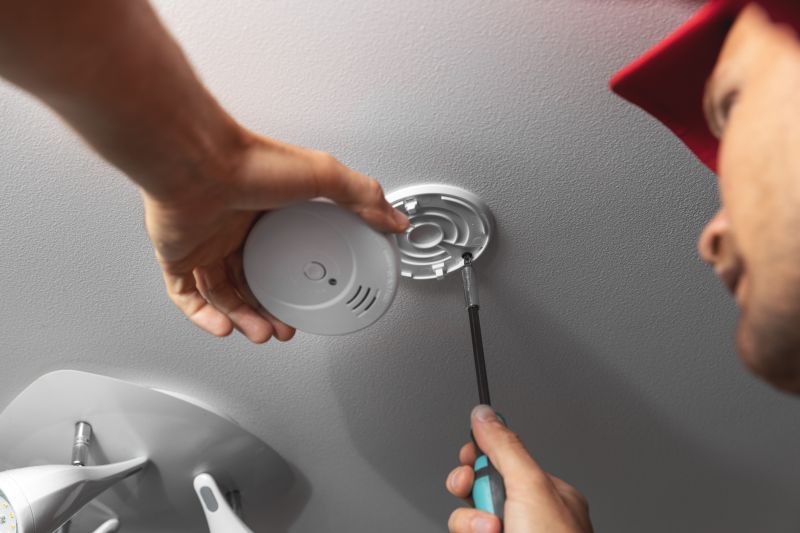 Installing smoke detectors is a crucial step in ensuring safety within residential and commercial spaces. The process involves selecting appropriate products that fit the specific needs of the environment, whether it is a small apartment or a large commercial building. Proper installation not only guarantees effective detection of smoke or fire but also ensures compliance with safety standards. There are various types of smoke detectors and installation accessories available, each designed to serve different purposes and settings.
Top Overall Option
Multi-Function Smoke Detector Mounting Kit
This versatile mounting kit includes adjustable brackets, wiring connectors, and mounting hardware designed to accommodate various smoke detector models. It simplifies installation and ensures secure attachment on different surfaces. Compatible with both wired and wireless detectors, it offers flexibility for different building setups. The kit also includes detailed instructions and all necessary components for a professional-looking installation.
Types of Products For Smoke Detector Installations
Wired Smoke Detector Units
Hardwired detectors connect directly to your building's electrical system and often include backup batteries for continuous operation during power outages.
Wireless Smoke Detectors
Battery-powered or Wi-Fi enabled detectors that can be easily installed without extensive wiring, offering flexibility in placement.
Combination Smoke and Carbon Monoxide Detectors
Units that monitor both smoke and carbon monoxide levels, providing comprehensive safety alerts in one device.
Interconnected Alarm Systems
Multiple detectors linked together so that when one detects smoke, all alarms sound simultaneously, enhancing safety coverage.
Smart Smoke Detectors
Connected to mobile apps, these detectors offer real-time alerts, status updates, and remote testing capabilities.
Mounting Brackets and Hardware
Accessories designed to securely attach detectors to ceilings or walls, compatible with various models and surfaces.
Wiring Connectors and Adapters
Components that facilitate seamless electrical connections between detectors and power sources.
Replacement Batteries
Long-lasting batteries designed for easy replacement, ensuring continuous operation of wireless detectors.
Detector Cleaning Tools
Brushes and cleaning sprays to maintain detector sensitivity and prevent dust buildup.
Extension Cables
Cables that extend wiring reach for hardwired detectors in larger or complex spaces.
Sensor Test Devices
Tools that allow quick testing of detector functionality to ensure proper operation.
Alarm Silencers and Mute Buttons
Accessories to temporarily silence alarms during false triggers or maintenance.
Power Supply Adapters
Adapters that convert power sources to compatible voltages for wired detectors.
Alarm Enclosures
Protective covers that shield detectors from dust, insects, or accidental damage.
Installation Templates
Guides or stencils that assist in precise placement and drilling for mounting detectors.
Popular Choices
Popular for their ease of installation and flexibility, these detectors often feature smartphone connectivity and voice alerts.
Favored for comprehensive coverage, these systems activate all alarms simultaneously when one detects smoke.
Chosen for their dual monitoring capabilities, providing convenience in a single device.
Trending for their integration with home automation systems, offering remote monitoring and alerts.
Common in new constructions, these provide reliable power and continuous operation during outages.
Popular for retrofit installations and areas without existing wiring, with long-lasting batteries.
Enhanced with voice alerts for clearer communication of alarm status.
Preferred for detecting smoldering fires and reducing false alarms caused by cooking or steam.
Effective at sensing fast-flaming fires, often used in bedrooms and hallways.
Popular for their straightforward setup and secure attachment options.
Useful in larger buildings where wiring distances are considerable.
Commonly purchased to ensure detectors remain operational over time.
Enhance existing systems by enabling wireless communication between detectors.
Ideal for installation in tight or discreet locations.
Central hubs that coordinate multiple detectors and alert systems.
When choosing products for smoke detector installation, considerations such as compatibility with existing wiring, ease of mounting, and battery life are important. Wireless options can offer more flexibility, especially in retrofit situations, while hardwired detectors may provide more reliable power sources. Additionally, some detectors come with advanced features like interconnected alarms, voice alerts, or low-battery indicators, which can enhance safety and convenience.
The placement of smoke detectors plays a significant role in their effectiveness. They should be installed on every level of a building, inside bedrooms, and outside sleeping areas. Proper accessories, such as mounting brackets and wiring connectors, facilitate a secure and efficient installation process. Maintenance products like replacement batteries and cleaning tools are also essential to keep detectors functioning optimally over time.
Understanding the variety of available products and their specifications can help in making informed decisions. Whether you are installing new detectors or upgrading existing ones, selecting the right components ensures a safer environment for all occupants. Investing in quality installation products and accessories is a vital part of comprehensive fire safety planning.
Key Buying Considerations
- Compatibility with existing wiring or power sources
- Type of sensor technology (photoelectric, ionization, or dual sensors)
- Ease of installation and mounting options
- Battery life and ease of battery replacement
- Interconnectivity with other alarms or smart home systems
- Additional features such as voice alerts or remote notifications
- Size and design to fit the intended installation space
- Compliance with local safety standards and regulations
- Maintenance requirements, including cleaning and testing
- Durability and resistance to dust, insects, or humidity
- Availability of replacement parts and accessories
- Cost and value for the features offered
- Warranty and customer support options
- Compatibility with retrofit or new construction projects
- User interface and ease of operation
This content contains affiliate links. We may earn a commission at no additional cost to you, which helps support our work and provides you with valuable product information.